

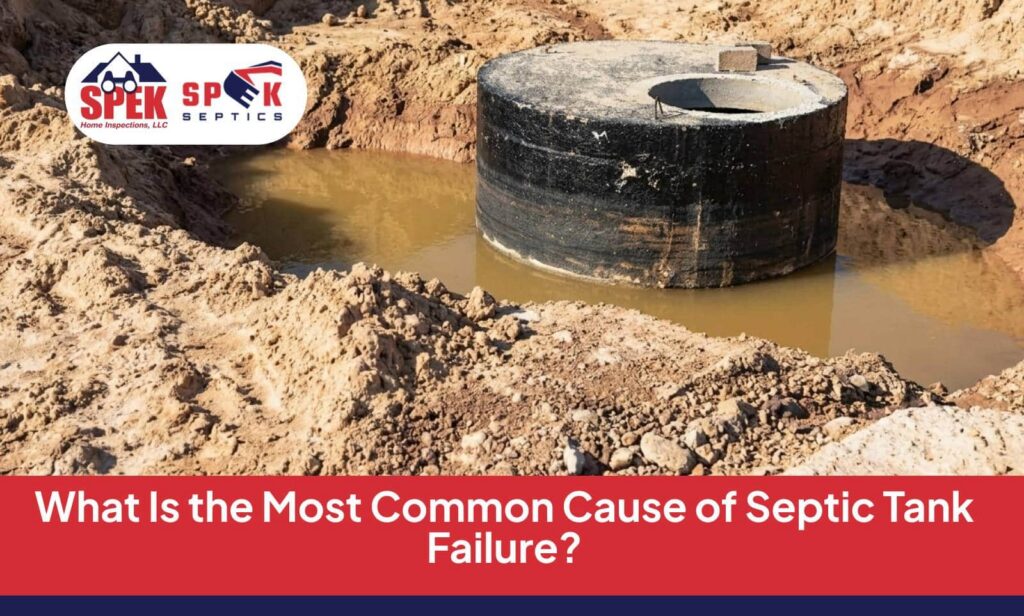
The most common cause of septic tank failure is skipped maintenance. When a tank goes too long without pumping, solids escape into the drain field and clog it.
What Causes Septic Tank Failure?
When a tank isn’t emptied on schedule, sludge and grease build up until they spill into the drain field and clog the soil that’s supposed to absorb wastewater.
Most septic systems malfunction because of poor maintenance. In Maryland, every new replacement system has to be designed to the property and approved through the county and state permitting process.
So when a properly permitted system fails, the cause is usually how it’s been cared for since it went in. That’s why routine pumping is the single most important maintenance step a homeowner can take.
Here’s the thing most people miss: when people say “septic tank failure,” the tank is often fine. The damage usually shows up downstream, in the drain field, and that’s often the most expensive part to fix.
A true septic tank failure means the tank itself is damaged: the concrete is cracked, it’s no longer watertight, or a component inside has broken. When homeowners talk about septic tank failure, they usually mean the whole system has stopped working, and the problem is most often in another component, like the drain field.
Why Skipped Maintenance Leads to Septic Tank Failure
A septic tank works by holding wastewater long enough for the solids to sink and become sludge, while fats, oils, and grease float to the top as scum.
A baffle at the outlet keeps the floating scum and settled sludge inside the tank, so only liquid effluent goes on to the drain field.
That only works while the tank has room.
Without regular septic tank emptying, the sludge and scum layers keep growing until there’s not enough clear liquid left between them. Then solids start leaving the tank with the effluent. Once they reach the drain field, they:
- Clog the perforated pipes and gravel or chambers in the trenches
- Thicken the biomat (the natural bacterial layer in the soil) until the soil stops absorbing
- Push wastewater back toward the house or up to the surface
What Happens When a Drain Field Stops Working?
Once a drain field stops working as intended, it often can’t be repaired, and because good percolation needs undisturbed soil, a new field may have to go in a different spot.
That’s why a routine pump-out matters so much: it protects the part of the system that’s often the hardest to replace.
For a conventional tank, is recommended pumping every 3 to 5 years, depending on tank size and how many people live in the home.
How Is Pumping Different for BAT Systems?
BAT units are different. Their pumping method and schedule depend on the manufacturer, so follow your BAT operations and maintenance provider’s guidance rather than a general rule.
Other Common Causes of Septic System Failure
Skipped pumping is the biggest cause, but it’s rarely the only one. These often stack on top of each other:
Hydraulic overload:
Too much water too fast. Leaking toilets, several loads of laundry back to back, water softener backwash, or roof and sump water draining toward the field can flood a system built for a set daily flow.
What goes down the drain:
“Flushable” wipes, paper towels, grease, and food scraps from a garbage disposal don’t break down well.
Harsh chemicals and additives:
Flushing bleach-based cleaners every day kills the bacteria the tank depends on. Enzyme and bacteria additives don’t help, and some can stir up the sludge and send solids into the field.
Physical damage:
Driving, parking, or building over the tank or field crushes pipes and compacts the soil.
Tree roots:
Roots go after the moisture in a septic system and can get into the tank, the distribution box, and the drain lines, where they cause blockages and can crack components. Keep trees, shrubs, and other deep-rooted plants away from every part of the system, not just the drain field. It’s recommended to keep trees at least 50 feet from the drain field. Shallow-rooted grass is the best cover over the system.
Age and design:
A typical system lives for 20 to 30 years. Some older Maryland systems were installed under standards that wouldn’t be approved today.
Signs of Septic System Failure to Watch For
Most systems give warnings before a full septic system failure. Watch for:
- Slow drains throughout the house, not just one sink
- Gurgling sounds in pipes when water drains or a toilet flushes
- Sewage backing up into a lower-level tub, shower, or floor drain
- Sewage or rotten-egg odors near the tank, the field, or inside the house
- Wet, spongy ground or standing water over the tank or drain field in dry weather
- Grass over the drain field that’s noticeably greener and thicker than the rest of the yard
- A septic alarm on a pump system or BAT unit
Most systems give warnings before a full septic tank failure. Watch for:
- Slow drains throughout the house, not just one sink
- Gurgling sounds in pipes when water drains or a toilet flushes
- Sewage backing up into a lower-level tub, shower, or floor drain
- Sewage or rotten-egg odors near the tank, the field, or inside the house
- Wet, spongy ground or standing water over the tank or drain field in dry weather
- Grass over the drain field that’s noticeably greener and thicker than the rest of the yard
- A septic alarm on a pump system or BAT unit
Septic Tank Failure Cleanup: What to Do First
If sewage is surfacing in the yard or backing up indoors, safety comes before anything else. Good septic tank failure cleanup starts with these steps:
- Cut back on water right away. Run fewer laundry loads, take shorter showers, and don’t use the dishwasher. Every gallon you send down the drain adds to the problem.
- Keep people and pets away. Sewage can carry harmful pathogens, so keep children and animals out of wet or contaminated areas.
- Don’t open or enter the tank. Septic tanks are confined spaces that can hold dangerous gases. A collapsed or open tank should be covered and roped off, never stepped near.
- Protect yourself during cleanup. The EPA recommends protective clothing, including long rubber gloves and face splash protection, for anyone doing cleanup.
- Disinfect hard surfaces, not soil. The EPA recommends a mix of 90 percent water and 10 percent household bleach for exposed items and surfaces. Let the area dry completely for at least 24 hours before using it again. Public health agencies advise against pouring bleach onto grass or soil.
- Call a septic professional. Cleaning up the surface doesn’t fix what caused the overflow.
Some counties set their own interim rules for failing systems. Anne Arundel County, for example, requires property owners to pump the tank, contain the overflow, apply hydrated lime to affected ground, and restrict access to a collapsed tank until it’s repaired.
If sewage is backing up or surfacing right now, contact SPEK for emergency septic service as soon as you can to confirm availability.
Can a Failed Septic System Be Fixed? Drain Field Repair vs. Replacement
Sometimes, depending on which part failed and how long it was left. A failed tank component, pump, baffle, or distribution box can usually be repaired without touching the rest of the system.
The tank and the drain field are separate parts, so one can be replaced while the other is kept.
Fields with root intrusion, light compaction, or early buildup can sometimes be rehabilitated, for example by jetting the lines and fixing the upstream cause. A field that’s completely saturated and no longer accepts effluent usually can’t be restored.
Leach field repair and septic drain field repair are the same work under different names. “Leach field” and “drain field” mean the same part of the system. Whichever term you use, the approach should be the same:
- Find out what’s actually causing the problem
- Identify which component is affected
- Repair that component where conditions allow it
- Consider replacement only when the evaluation supports it
In Maryland, major repairs and replacements generally need a permit through your county Environmental Health department, and the approving authority decides what gets approved.
How a Septic Inspection Helps You Catch Failure Early
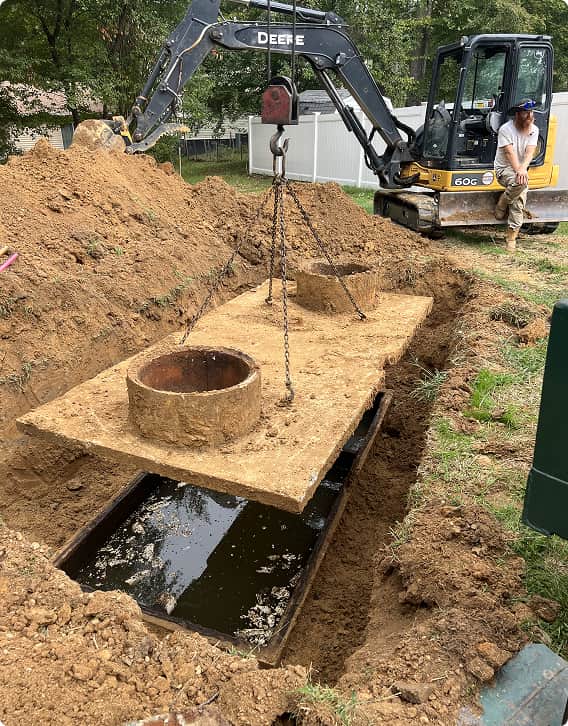
A septic inspection records the condition of the system on the day it’s inspected: tank levels, baffles, visible components, and how the drain field is handling flow. It won’t guarantee the system’s future, but it gives you real information instead of guesses.
An inspection is especially worth getting when:
- You’re buying or selling a home with septic
- You don’t know when the tank was last pumped
- You’ve started noticing any of the warning signs above
- You’ve moved into a home with a BAT unit and no service history
Help With Septic Tank Failure in Southern Maryland
If you’re in Calvert, Charles, or St. Mary’s County, SPEK Septics handles septic repairs, diagnostics, drain field work, and emergency service, and coordinates with the applicable county on permitting. In Lower Anne Arundel and Prince George’s Counties, our service is limited mainly to inspections and operations and maintenance.
SPEK is family-owned and locally operated, and owner Ryan Nagi is directly involved in the work. We find the cause first, explain what we found, and favor a targeted repair over a full replacement wherever the system allows it.
Call SPEK Septics at 240-925-0085 to talk through what you’re seeing.
Frequently Asked Questions About Most Common Cause of Septic Tank Failure
What are the signs of septic tank failure?
When people say their septic tank is failing, they usually mean the whole system is struggling, and the cause is often a different component, like the drain field, a pump, or the distribution box. Common signs include slow drains throughout the house, gurgling pipes, sewage odors, wet or spongy ground or unusually green grass over the drain field, sewage backing up into a lower-level drain, and a septic alarm on systems that have one. A diagnostic evaluation pinpoints which part is actually causing the problem.
What causes septic tank failure?
The leading cause is skipped maintenance, especially going too long without pumping, which lets solids flow into and clog the drain field. Other causes include hydraulic overload from leaks or heavy water use, flushing wipes and grease, harsh chemicals, vehicles or structures over the system, tree roots, and age. Many failures come from more than one of these together.
How much does a septic tank failure cleanup cost?
It depends on the situation. Key factors include whether sewage reached inside the home or stayed outdoors, how much area was affected, whether the tank needs pumping, what failed, and whether the repair needs excavation or a county permit. Indoor sewage cleanup may also involve a restoration company separate from the septic repair. The only reliable number comes from an on-site evaluation, so contact SPEK for an estimate on your property.
Can a failed septic system be fixed?
Sometimes. Pumps, outlet baffles, distribution boxes, and pipes can often be repaired, and some drain fields can potentially be rehabilitated if the problem is caught early. A drain field that’s fully saturated usually needs replacing, and in Maryland that means county permitting. A diagnosis tells you which situation you’re in.
How many years does a septic tank usually last?
According to the University of Maryland Extension, septic systems typically last 20 to 30 years before needing replacement. Poor maintenance, groundwater or surface water getting in, tree roots, and misuse can shorten that. Regular pumping and protecting the drain field help a system reach the longer end of that range.
Will homeowners insurance cover a failed septic system?
Usually not. Standard homeowners policies typically exclude damage from wear and tear, age, clogs, or lack of maintenance, which covers most septic failures. Coverage generally applies only when a sudden covered event, like a fire or lightning strike, causes the damage. The same usually goes for drain fields. Check your policy and ask your agent about sewer or water backup endorsements.
How often should a septic tank be pumped?
For a conventional tank, the University of Maryland Extension recommends every three to five years, depending on tank size and household size, and never more than five years between pump-outs. BAT units follow the manufacturer’s schedule, so ask your O&M provider.
Do septic additives prevent septic tank failure?
No. Research cited by the University of Maryland Extension found that bacterial and enzyme additives don’t improve septic performance, and some can push solids out of the tank into the drain field. Normal household use already supplies all the bacteria the tank needs.